Get the ASTROLOGUS Android App ($4.99 / 50 credits)

Nikola Tesla

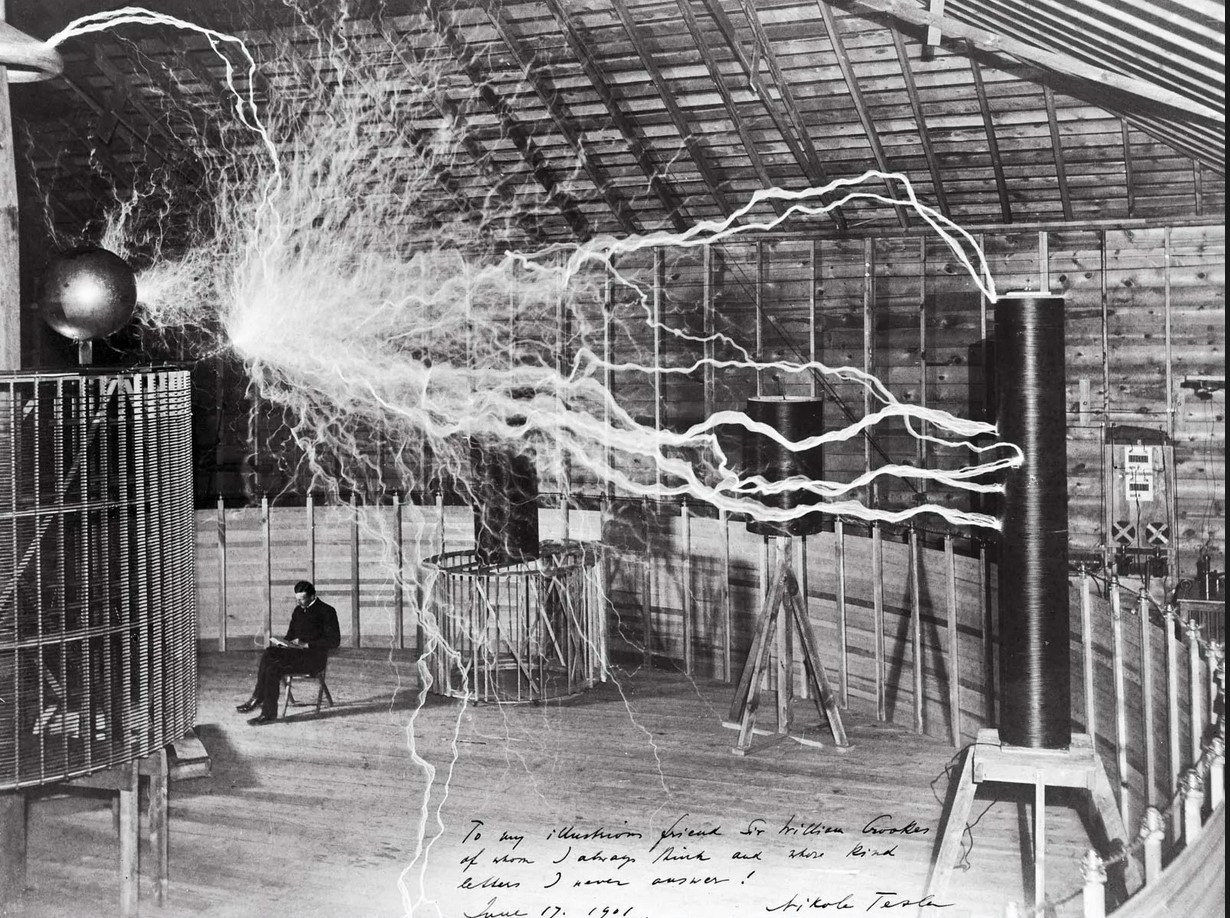
Nikola Tesla was the Prometheus of electricity. Famously born at midnight during a lightning storm in Smiljan, Croatia—and as such, doomed to shine—he claimed to receive visions: solutions appearing whole, perfect, alive in his mind. His genius gave us alternating current, the Tesla coil, wireless transmission, and a thousand unrealized inventions buried in notebooks like prophecies in a sealed tomb of a genius who might have been mad. He spoke eight languages, slept in bursts we now call micro-sleep, imagining we share his mind. In New York, Nikola Tesla fed pigeons with mystical devotion, akin to that of Mike Tyson, and died penniless in a hotel. But the world still hums with his frequencies. He turned the switch of the future on.
Thomas Edison
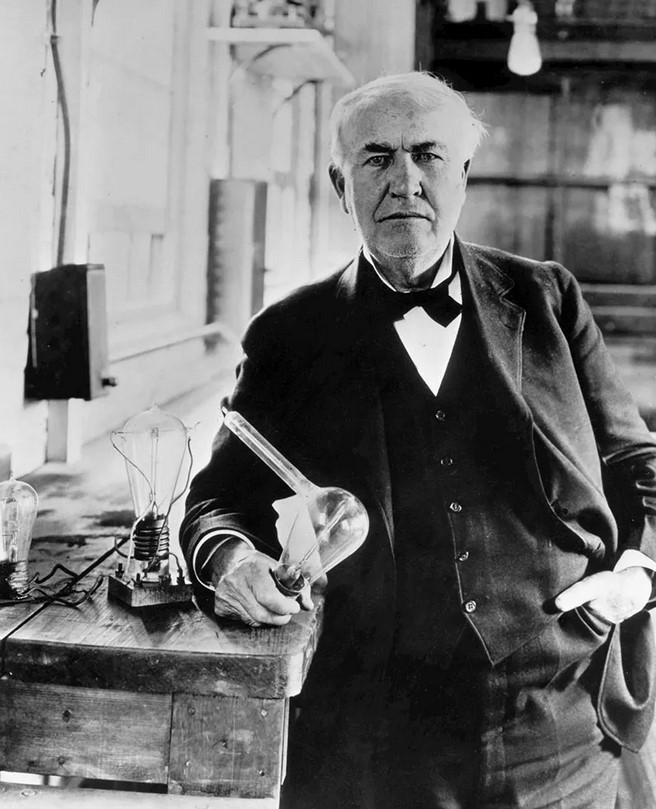
Thomas Edison was the rare beast: the true industrial sorcerer of the modern age. Born in Ohio in 1847, partially deaf and endlessly curious, he represents the proverbial American story. Edison built an empire of light with filament, sweat, and patents. With over a thousand inventions to his name—the phonograph, the incandescent bulb, the motion picture camera—Edison systematized invention. His Menlo Park lab became the first R&D institution. Critics called him a thief, a brute, a capitalist machine. But he electrified the ordinary world while others were still drawing blueprints. Like Tesla, he didn’t imagine the future—he made it. He manufactured it.
Dialogue With the Stars: A Hypothetical Meeting
You: They, and their stars, shared vision that holds the potential to change the world. But who were they? No one other than Nikola Tesla and Thomas Edison. Shed a starry light to these titans of electricity and dig deeper into the constellations: why were they so great and yet, so different?
The Alchemist: Nikola Tesla and Thomas Edison, two titans of electricity, were indeed guided by celestial forces that shaped their extraordinary contributions and distinct approaches.
Nikola Tesla was known for his visionary ideas and groundbreaking inventions. If we were to imagine his astrological influences, we might see a strong presence of Mercury, indicating his brilliant mind and capacity for innovation. A harmonious aspect between Mercury and Uranus could suggest his genius for original thought and revolutionary ideas. Additionally, a powerful Jupiter influence might denote his expansive vision and pursuit of knowledge beyond conventional boundaries.
Thomas Edison, on the other hand, was a pragmatic inventor and industrious businessman. His astrological chart might reveal a strong Mars influence, highlighting his relentless energy and determination. A supportive aspect between Mars and Saturn could illustrate his disciplined approach and ability to manifest ideas into practical inventions. Moreover, a robust Saturn presence would echo his persistence and work ethic in developing long-lasting contributions to technology.
Their greatness lay in their shared ability to harness the power of electricity, yet their differences were marked by their celestial influences. Tesla's visionary and boundary-pushing nature contrasted with Edison's methodical and industrious approach. While Tesla dreamed of a world transformed by wireless energy, Edison focused on practical applications like the electric light bulb. Their stars guided them on divergent paths, yet both left an indelible mark on the world through their contributions to electricity and technology.
You: Speaking of which, what would you say, the most pragmatic planet is... and the most ingenious is...??
The Alchemist: In the realm of classical astrology, the most pragmatic planet is Saturn. Saturn embodies structure, discipline, and the material realities of life. It governs hard work, perseverance, and the pragmatic approach necessary to manifest ideas into tangible results. Saturn's influence is often associated with diligence and the sober, methodical pursuit of goals.
On the other hand, Mercury is the planet of ingenuity. Mercury rules communication, intellect, and the mind's agility. It governs quick thinking, adaptability, and the ability to innovate and solve problems creatively. Mercury's influence fosters the spark of genius and the capacity to conceive novel ideas and approaches.
Together, Saturn and Mercury represent the balance between the practical execution of ideas and the creative spark that brings those ideas to life.
You: If, in 2026 to kids would be born, in Smiljan, Croatia and Milan, Ohio, would those kids have the same starry predisposition for greatness of was that once in a lifetime, OK, twice in a lifetime occurrence?
The Alchemist: In the grand tapestry of the cosmos, every birth is unique, weaving its own intricate pattern of celestial influences. The greatness of individuals like Nikola Tesla and Thomas Edison was shaped not only by their astrological charts but also by the era and environments in which they lived.
If two children were born in Smiljan, Croatia, and Milan, Ohio, in 2026, they would be born under different celestial configurations than those that guided Tesla and Edison. The positions of the planets, the aspects formed, and the signs they occupy would create distinct charts, offering their own potentials and challenges.
While certain planetary alignments may echo the genius and pragmatism seen in Tesla and Edison, each chart would reflect the unique potential of the individual. Greatness is not solely determined by astrology but also by the choices, opportunities, and circumstances that shape one's life journey.
Thus, while these children could possess their own forms of brilliance and potential for greatness, it would not be a mere repetition of past luminaries but rather a new expression of the infinite possibilities written in the stars.
You: In a conclusion, and we'll let other users of your own genius ask for more, how would you, in two starry sentences max, characterize Tesla and Edison existence at the same time?
The Alchemist: Tesla and Edison, guided by distinct celestial paths, embodied the dance between visionary genius and pragmatic innovation. Their simultaneous existence was a cosmic convergence of inventive brilliance and industrious transformation.
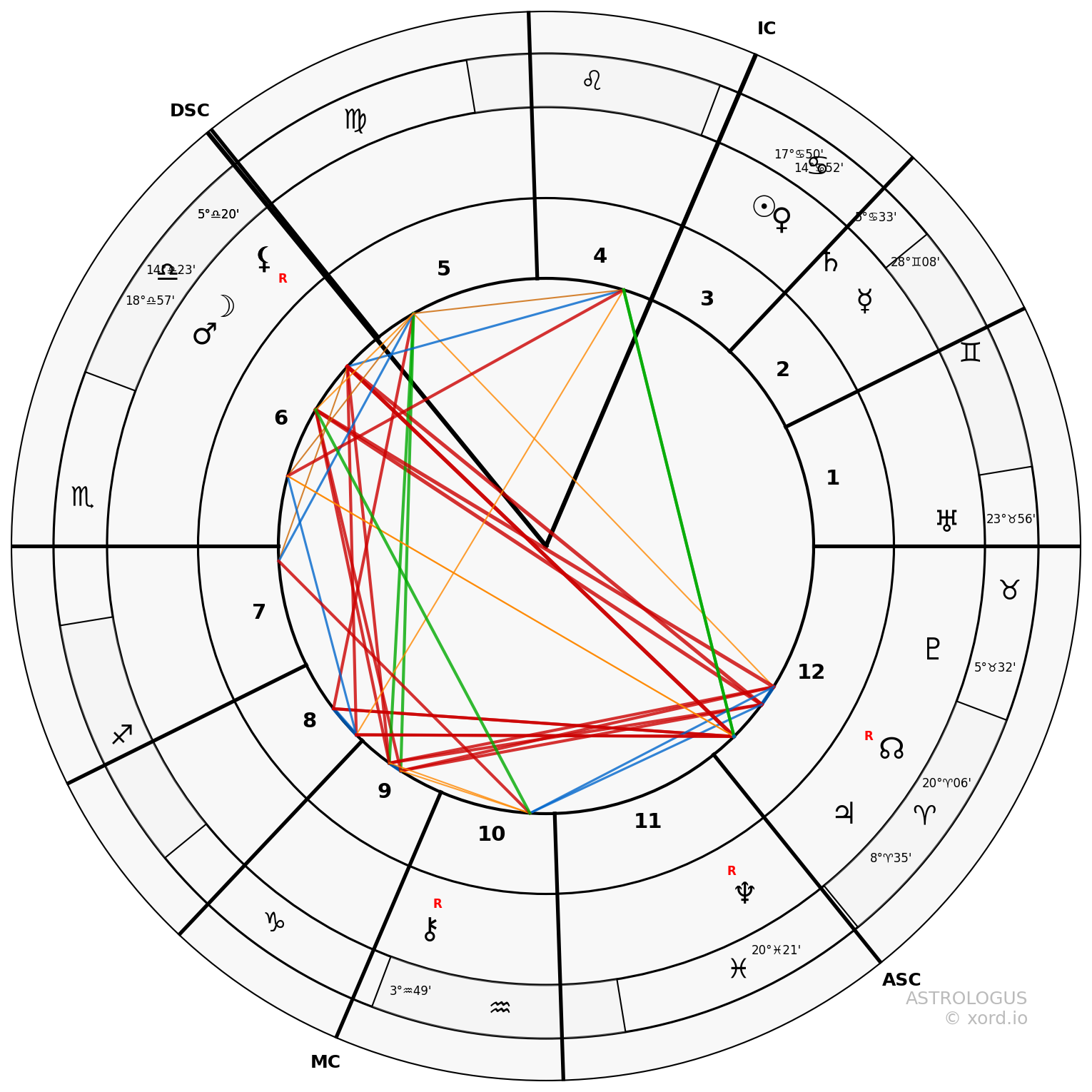
Nikola Tesla and Thomas Edison collided. This chart above is Tesla’s, but if you’re drawn to the tension of invention and intuition in our own century, see The Engineer & The Oracle: The Synastry of Elon Musk & Grimes. While Grimes is not a scientist, Elon Musk is arguably the most feverishly curious figure alive. Nicola Tesla lived in voltage; Thomas Edison built its infrastructure. Their synastry surges like the currents in their veins, encoded in stars.
You've seen their charts. Now discover your own. A one-time purchase of $4.99 unlocks the ASTROLOGUS platform and 50 readings across all AI personas.
Disclaimer: This is for exploration and symbolic insight only. ASTROLOGUS offers rigorous interpretations, but no claim is made beyond the symbolic and artistic.
It's not astrology predicting your life.
It's you recognizing your life inside astrology.
About the Author: Cesare di Monte Calvi is the esoteric historian behind The Raven’s Enigma and lead mythographer of the ASTROLOGUS project. His work bridges Renaissance gnosis with digital cartography, reviving the lost grammar of the stars for a post-algorithmic age.