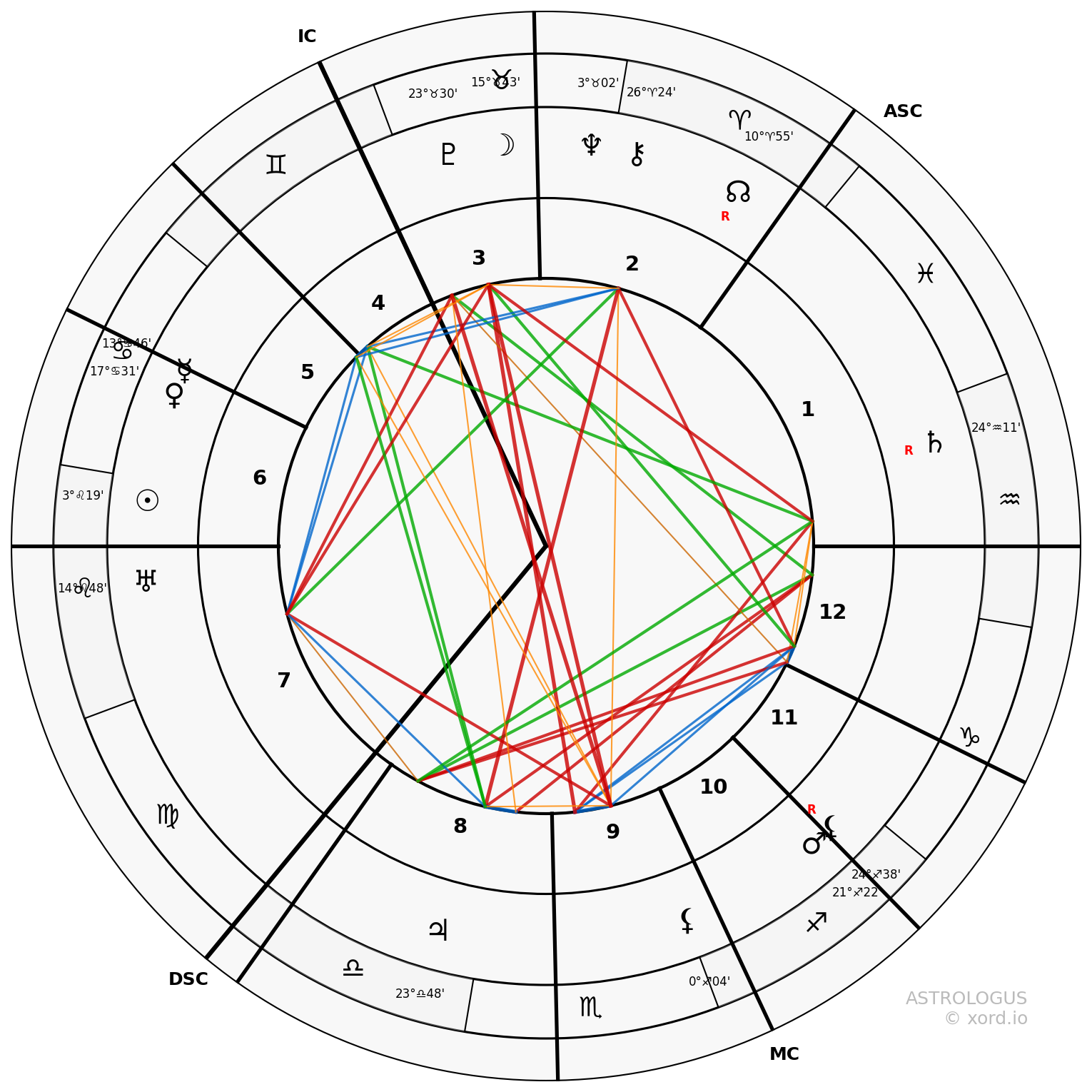
Sun Trine Jupiter (2.35°):
This harmonious aspect suggests optimism and mutual growth between the individuals. The trine indicates a flowing energy that fosters confidence and support, enhancing their capacity for shared success and expansion. The orb is moderately tight, indicating a strong influence.
Moon Trine Venus (3.34°):
This aspect signifies emotional and romantic harmony. It suggests a natural, easy emotional connection and affection. The trine facilitates a pleasant and supportive interaction, contributing to a nurturing and loving relationship.
Moon Square Saturn (1.07°):
This tense aspect indicates potential emotional challenges. The square, with a tight orb, suggests obstacles in emotional expression and a tendency toward emotional restriction or inhibition. This can manifest as a need to work through issues of emotional security and responsibility.
Moon Sextile Uranus (3.56°):
This aspect introduces an element of excitement and unpredictability into the emotional dynamic. The sextile indicates opportunities for growth through embracing change and innovation in emotional expression, suggesting a stimulating and dynamic relationship.
Moon Square Neptune (0.39°):
The exceptionally tight square indicates potential for misunderstandings and emotional confusion. This aspect can lead to idealization or deception, requiring clear communication and boundaries to avoid disillusionment.
Mercury Conjunction Moon (1.74°):
This conjunction suggests a strong mental and emotional connection. Communication is likely to be intuitive and empathetic, with a deep understanding of each other's thoughts and feelings. The relatively tight orb enhances the strength of this connection.
Venus Trine Uranus (1.77°):
This harmonious aspect indicates a relationship that values freedom and individuality within the context of love and affection. It brings excitement and a sense of uniqueness to the partnership, encouraging creative expression.
Summary: Sun Trine Jupiter (2.35°): This harmonious aspect suggests optimism and mutual growth between the individuals. The trine indicates a flowing energy that fosters confidence and support... Moon Trine Venus (3.34°): This aspect signifies emotional and romantic harmony.
Sun Trine Jupiter:
In the cosmic interplay between these two souls, we begin with the Sun Trine Jupiter. This aspect drenches their connection in a golden light of expansive growth and mutual understanding. The Sun, the heart of being, finds harmonious resonance with Jupiter's benevolent wisdom, suggesting a relationship enriched by shared ideals and generous spirits. They are like two travelers journeying together, their paths naturally aligned toward brighter horizons.
Moon Trine Venus:
The Moon Trine Venus enhances this celestial journey with a tender, nurturing bond. The Moon, ruler of emotions, flows gracefully with Venus, the goddess of love, creating an atmosphere of affection and appreciation. This aspect whispers of soft, intimate moments, where emotional needs are met with the soothing balm of Venusian grace.
Moon Square Saturn:
Yet, the Moon Square Saturn introduces a shadow, a test of emotional resilience. Saturn, the stern teacher, challenges the Moon's sensitivity, demanding commitment and maturity. This aspect may bring periods of emotional restraint or distance, urging both to build a relationship on solid, enduring foundations.
Moon Sextile Uranus:
The dance of the Moon with Uranus in a Sextile breathes life and spontaneity into their connection. Uranus, the revolutionary, invites change and innovation, allowing their emotional world to be ever-refreshing and filled with surprises. This aspect encourages them to embrace the unconventional and to find freedom within the relationship's emotional landscape.
Moon Square Neptune:
Conversely, the Moon Square Neptune casts a veil of illusion or misunderstanding, as Neptune's ethereal nature can cloud the Moon's clarity. This aspect suggests the potential for dreams and fantasies to intermingle with reality, urging them to seek truth and avoid deception in emotional matters.
Mercury Conjunction Moon:
Mercury's Conjunction with the Moon brings a meeting of minds and hearts, where communication flows deeply and intuitively. This union suggests a connection where words are not always necessary, as understanding is often felt rather than spoken.
Venus Trine Uranus:
Venus Trine Uranus offers a spark of excitement and originality in their romantic bond. Venus, the lover, in harmony with Uranus, the innovator, suggests a relationship that thrives on novelty and freedom, where love is given wings to explore new dimensions.
Summary: In the cosmic interplay between these two souls, we begin with the Sun Trine Jupiter. This aspect drenches their connection in a golden light of expansive growth and mutual understanding. The Sun, the heart of being, finds harmonious resonance with Jupiter's benevolent wisdom, suggesting a relationship enriched by shared ideals and generous spirits.
✨ Extended Symbolic Reading ✨
Sun Trine Jupiter (2.35°):
In the celestial tapestry of this relationship, the Sun Trine Jupiter casts a golden light, infusing the connection with boundless optimism and expansive growth. This aspect is a benevolent guide, encouraging each to explore the edges of their potential together, much like the mythic journey of heroes who find fortune in their union.
Moon Trine Venus (3.34°):
The Moon Trine Venus weaves a soft, nurturing bond, akin to the sacred dance of love and harmony. This aspect paints the canvas with gentle strokes of affection and aesthetic appreciation, reminiscent of the divine interplay between lunar mysteries and the goddess of beauty. Here, emotional comfort and shared pleasures create a sanctuary of mutual delight.
Moon Square Saturn (1.07°):
Yet, the Moon Square Saturn introduces a shadowy tension, a reminder of life's inevitable challenges. This aspect echoes the ancient struggle between the nurturing moon and the strict taskmaster Saturn, where emotional needs may clash with duties and restrictions. In navigating this, the relationship is tempered like steel, learning resilience and patience.
Mercury Conjunction Moon (1.74°):
Mercury Conjunction Moon aligns the mind with the soul's whispers, allowing communication to flow with intuitive understanding. It's the oracle's voice, where thoughts and feelings merge seamlessly, creating a dialogue that is both profound and deeply personal.
Venus Semisextile Mars (0.04°) and Mars Semisextile Venus (0.04°):
This forms a reciprocal dance of attraction and passion. They are the cosmic lovers, eternally drawn to one another, sparking the fires of desire and creativity. Yet, this is not without its complexities, as Venus Quincunx Saturn (0.75°) adds a layer of caution, where love must navigate the labyrinth of responsibility and duty.
Jupiter Sextile Mars (3.53°):
Jupiter Sextile Mars energizes this dynamic with the vigor of a hero's courage, driving the pair toward shared adventures and bold pursuits. This aspect is a call to action, urging them to embrace life's challenges with enthusiasm and confidence.
Saturn Square Mercury (2.77°) and Saturn Opposition Mars (3.93°):
These cast longer shadows, where the structures of thought and action meet resistance. Like the trials of ancient myths, these aspects demand patience and perseverance, transforming obstacles into stepping stones for growth.
Summary: In the cosmic interplay between these two souls, the Sun Trine Jupiter aspect casts a golden light upon their connection, suggesting a relationship imbued with generosity, optimism, and mutual growth. The Moon Trine Venus creates a gentle harmony between emotions and affections... Yet, the Moon Square Saturn introduces a shadow into the otherwise harmonious landscape, hinting at emotional restrictions or fears.