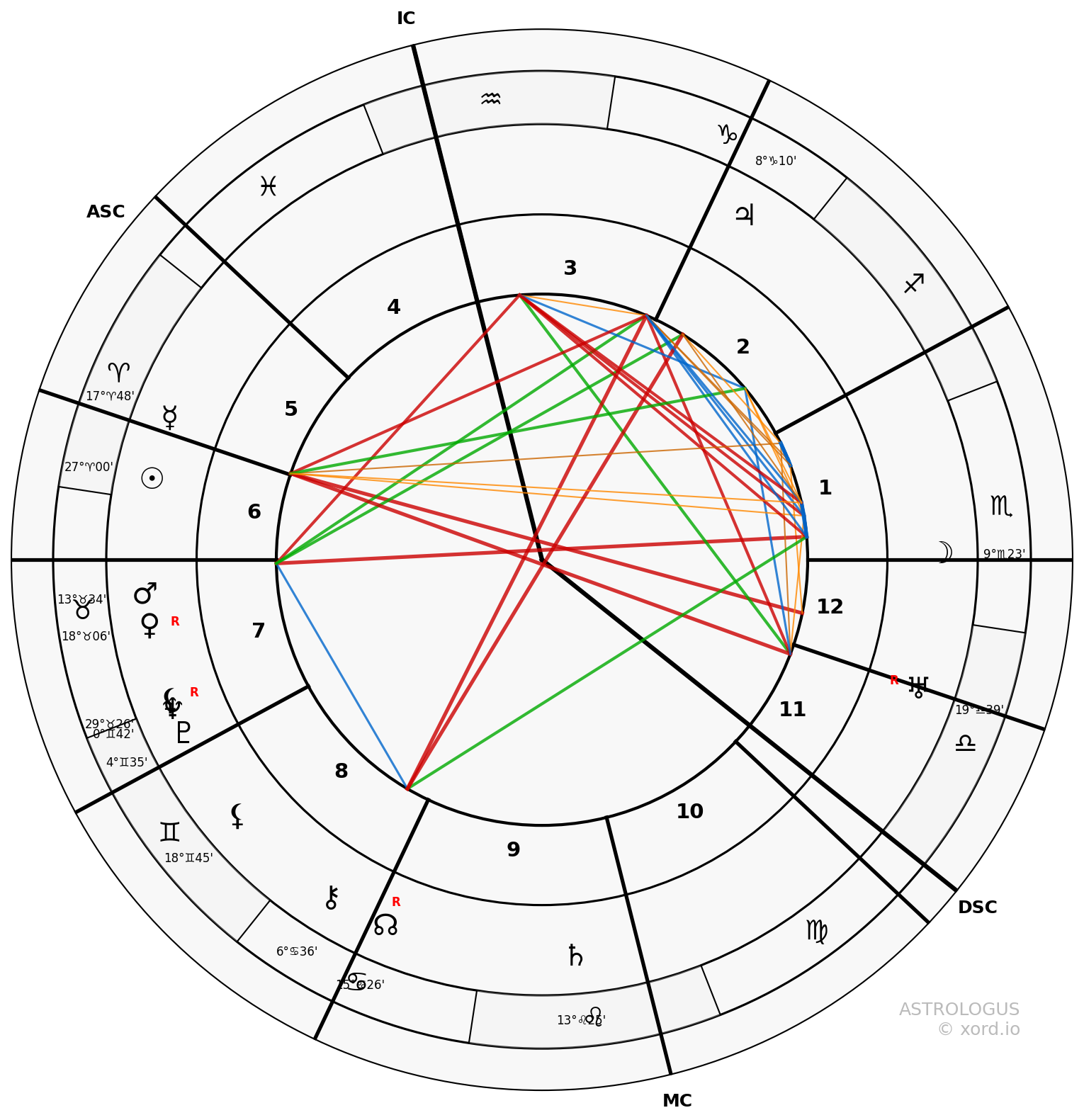
Sun Conjunction Mercury (0.73°):
This aspect is tightly bound, indicating a strong mental connection and communication between the individuals. It suggests a harmonious exchange of ideas, with both parties likely to understand and articulate their thoughts effectively to each other.
Moon Conjunction Saturn (0.67°):
This close conjunction implies emotional seriousness and responsibility in the relationship. While it can bring stability, it may also impose emotional restrictions, potentially leading to a sense of emotional duty or heaviness.
Moon Trine Pluto (2.48°):
A harmonious aspect that suggests a deep emotional connection. It indicates transformative emotional interactions that can lead to significant personal growth for both individuals.
Mercury Sextile Moon (2.53°):
This aspect supports emotional communication, facilitating understanding and empathy in discussions. It enables the sharing of feelings in a constructive manner.
Mercury Trine Neptune (2.03°):
This aspect enhances intuitive communication and creativity. It suggests that both parties may engage in imaginative or spiritual conversations, enriching their verbal exchanges.
Venus Square Moon (2.84°):
A tense aspect that can lead to conflicts between emotional needs and expressions of affection. It may cause misunderstandings in how love and care are communicated.
Venus Trine Jupiter (4.38°):
A harmonious aspect that promotes warmth, generosity, and expansion in romantic and social interactions. It encourages optimism and mutual enjoyment.
Venus Square Neptune (1.73°):
This aspect may lead to idealization or illusion within the relationship, possibly resulting in disappointment if expectations are not grounded in reality.
Mars Square Moon (1.71°):
A tense aspect indicating potential emotional volatility and conflict. It suggests that impulsivity or assertiveness could challenge emotional sensitivity.
Mars Opposition Saturn (3.51°):
This aspect may introduce friction between desires for action and restrictions. It could manifest as frustration or feeling blocked in attempts to assert oneself.
Mars Sextile Pluto (1.7°):
A harmonious aspect that favors powerful and transformative actions. It suggests that the individuals can work together effectively to achieve significant goals.
Jupiter Sextile Saturn (1.89°):
This harmonious aspect balances expansion and structure, suggesting that the individuals can combine optimism with practicality in their endeavors.
Jupiter Opposition Pluto (3.71°):
A tense aspect indicating potential power struggles or differences in ideological beliefs. It may bring challenges in balancing growth with transformative forces.
Saturn Opposition Moon (1.85°):
This aspect emphasizes emotional restraint and responsibility, potentially leading to feelings of emotional limitation or obligation.
Uranus Trine Moon (4.38°):
This harmonious aspect introduces a sense of excitement and change, suggesting that emotional interactions are dynamic and stimulating.
Uranus Square Jupiter (2.84°):
A tense aspect that may result in unpredictability in expansion efforts. It could lead to sudden changes in beliefs or disruptions in growth patterns.
Neptune Conjunction Venus (2°):
This conjunction suggests a blend of idealism and romance, promoting a dreamy and spiritual quality in the relationship. However, it could also lead to idealization or lack of clarity in romantic expressions.
Summary: In summary, the synastry reveals a mix of harmonious and tense aspects, indicating a relationship with strong communication and potential for emotional depth, alongside challenges in balancing emotional needs and expectations.
Sun Conjunction Mercury:
In the cosmic theater of these two souls, the Sun Conjunction Mercury aspect stands first, illuminating the shared stage of intellect and communication. This alignment signifies a union where thought and expression are harmoniously intertwined, suggesting conversations that dance between clarity and insight, where words become golden threads weaving mutual understanding.
Moon Conjunction Saturn:
Next, the Moon's Conjunction with Saturn highlights an emotional landscape shaped by duty and discipline. This aspect whispers of a bond that may feel heavy with responsibility, yet it offers the gift of emotional resilience. Together, these two may find strength in structure, building a fortress of shared experiences that weather the storms of time.
Moon Trine Pluto:
The Moon Trine Pluto aspect introduces a transformative energy, suggesting an undercurrent of profound emotional change and empowerment within their connection. It is as if they hold the keys to each other's deepest emotional depths, capable of facilitating healing and metamorphosis through their shared journey.
Mercury Sextile Moon:
Mercury Sextile Moon enriches their communication further by adding a layer of emotional intelligence. The dialogue between them is not only intellectual but also deeply empathetic, where feelings are easily articulated and understood, creating a nurturing space for emotional exchange.
Mercury Trine Neptune:
Mercury Trine Neptune brings a touch of the ethereal to their interactions, infusing their communication with imagination and idealism. This aspect allows for a shared vision that transcends the mundane, enabling them to dream together and explore the realms of creativity and intuition.
Venus Square Moon:
Venus Square Moon introduces a tension between emotional needs and desires. This aspect can manifest as an emotional push and pull, where comfort and affection might sometimes clash with deeper emotional currents. Navigating these waters requires sensitivity and understanding.
Venus Trine Jupiter:
In contrast, Venus Trine Jupiter blesses their relationship with harmony, generosity, and an innate sense of joy. Together, they are likely to experience moments of abundance and happiness, where love feels expansive and uplifting.
Venus Square Neptune:
Yet, Venus Square Neptune reminds them of the illusions that can arise in love, suggesting that clarity and realism are needed to avoid disillusionment. The challenge is to discern between dreams and reality, keeping the romantic idealism grounded.
Mars Square Moon:
Mars Square Moon introduces a dynamic tension, where emotions and actions may sometimes collide. This aspect speaks of a fiery passion that, while invigorating, can lead to conflicts unless tempered with patience and understanding.
Mars Opposition Saturn:
Mars Opposition Saturn suggests a potential struggle between action and restraint. This dynamic may create friction, where the drive to move forward is met with obstacles or delays, testing their perseverance and commitment.
Mars Sextile Pluto:
Mars Sextile Pluto, however, offers a powerful synergy, providing the strength to overcome challenges with determination and transformative action. Together, they can harness this energy to achieve great feats, fueled by an intense and shared ambition.
Jupiter Sextile Saturn:
Jupiter Sextile Saturn provides a stabilizing influence, blending optimism with practicality. This aspect supports their endeavors, enabling them to build a future together that is both expansive and grounded, where dreams are realized through steady effort.
Jupiter Opposition Pluto:
Jupiter Opposition Pluto introduces a theme of power struggles and transformation in their joint ventures. This aspect suggests a need to balance personal growth with shared ambitions, navigating the tides of change with mutual respect and understanding.
Saturn Opposition Moon:
Saturn Opposition Moon reiterates the theme of emotional weight, hinting at obstacles that must be overcome through emotional resilience. Yet, this challenge can deepen their bond, forging a connection fortified by shared trials and triumphs.
Uranus Trine Moon:
Uranus Trine Moon adds a spark of innovation and excitement, encouraging emotional freedom and spontaneity. This aspect brings a refreshing breeze to their relationship, allowing them to embrace change and novelty with open hearts.
Uranus Square Jupiter:
Uranus Square Jupiter introduces a theme of unpredictability, where sudden changes and shifts may challenge their shared beliefs and philosophies. This aspect invites adaptability, urging them to embrace the unexpected with grace and openness.
Neptune Conjunction Venus:
Finally, Neptune Conjunction Venus casts a veil of enchantment over their relationship, infusing it with romance and idealism. This aspect paints their love with the colors of dreams, allowing them to experience a deep, spiritual connection that transcends the ordinary.
Summary: Together, these celestial interplays form a rich tapestry of shared experiences, where the trials and triumphs of love are met with courage and creativity. In the mythic landscape of their relationship, they are both the architects and adventurers, crafting a story that is uniquely their own.
Sun Conjunction Mercury (0.73°):
This conjunction indicates a strong intellectual connection between the two. The Sun, representing the essence and vitality, aligns with Mercury, the planet of communication and intellect. This aspect suggests a relationship where communication flows effortlessly, allowing both individuals to understand each other's thoughts and ideas with clarity. This union fosters a harmonious exchange of ideas and mutual support in intellectual pursuits.
Moon Conjunction Saturn (0.67°):
Here, the Moon, the luminary of emotions and instincts, is closely bound with Saturn, the planet of structure and discipline. This conjunction can bring a serious, grounded emotional connection. While it may sometimes lead to emotional restraint or a sense of duty in the relationship, it also provides stability and a shared sense of responsibility towards one another. The relationship is likely to be enduring, with both parties valuing loyalty and commitment.
Mercury Sextile Moon (2.53°):
This aspect enhances emotional understanding through communication. Mercury's adaptable nature finds a harmonious link with the Moon's emotional depth, suggesting that both individuals are able to articulate their feelings and intuit each other's emotional needs. This aspect fosters empathy and the ability to resolve misunderstandings through dialogue.
Venus Square Moon (2.84°):
The square between Venus, the planet of love and harmony, and the Moon, can indicate tension between emotional needs and expressions of affection. This aspect may bring challenges in balancing personal desires with emotional security. However, it also suggests a dynamic interaction that can lead to growth and a deeper understanding of each other's emotional landscapes if navigated with care.
Mars Square Moon (1.71°):
The interaction here is one of intensity and potential conflict. Mars, the planet of action and desire, creates friction with the Moon's emotional realm. This can manifest as passionate exchanges but may also lead to disagreements if emotions are not managed constructively. The challenge lies in channeling this energy into productive and cooperative efforts rather than conflict.
Mars Opposition Saturn (3.51°):
This aspect suggests a tension between the drive to act and the need for discipline and patience. Mars' choleric nature finds resistance in Saturn's melancholic restraint. In a relationship, this can create challenges where one person may feel restricted by the other's need for control or caution. However, this opposition can also teach the value of timing and perseverance in achieving mutual goals.
Jupiter Sextile Saturn (1.89°):
A harmonious aspect where Jupiter, the planet of expansion and optimism, finds a balanced relationship with Saturn's structure. This aspect indicates that the relationship benefits from both growth and stability. It signifies the ability to work together towards long-term goals, blending optimism with a realistic approach to challenges.
Saturn Opposition Moon (1.85°):
This opposition can introduce a theme of emotional restraint or distance. While Saturn seeks structure, the Moon desires emotional expression, leading to potential conflicts between emotional openness and the need for boundaries. This aspect may require conscious effort to create an emotional balance, emphasizing the importance of trust and understanding to overcome feelings of isolation or emotional withdrawal.
✨ Extended Symbolic Reading ✨
Sun Conjunction Mercury (0.73°):
This conjunction represents a powerful alignment of intellect and identity. The Sun, embodying the essence of self and vitality, merges with Mercury's quicksilver nature, fostering communication and mental synergy. In a relationship, this aspect suggests a profound mutual understanding and a shared capacity for intellectual pursuits. The individuals may find it easy to express their thoughts and ideas to one another, creating a harmonious exchange of information and insights.
Moon Conjunction Saturn (0.67°):
Here, the nurturing and emotional Moon is tempered by Saturn's disciplined and structured nature. This conjunction can introduce a somber, serious tone to the emotional landscape between the individuals. The Moon's instinctual needs for comfort and emotional connection meet Saturn's demand for responsibility and maturity, potentially leading to a relationship where emotional security is built upon a foundation of commitment and shared responsibilities. This aspect may bring a sense of duty and endurance to the partnership.
Mercury Sextile Moon (2.53°):
This harmonious aspect enhances emotional intelligence and communication. Mercury's adeptness in conveying thoughts is gently supported by the Moon's intuitive understanding. In relational terms, it suggests an ease in discussing feelings and emotional matters, encouraging a nurturing dialogue that respects both logic and sentiment. This aspect can facilitate a deeper emotional exchange and mutual empathy.
Venus Square Moon (2.84°):
The square between Venus and the Moon introduces tension between the desire for harmony and the need for emotional expression. Venus seeks beauty, pleasure, and affection, while the Moon craves emotional security. This aspect may manifest as conflicting needs in the relationship, where one partner's pursuit of aesthetic or romantic ideals challenges the other's emotional comfort. Navigating this tension requires compromise and a willingness to balance personal desires with emotional needs.
Venus Trine Jupiter (4.38°):
In this trine, Venus, the planet of love and beauty, harmonizes with Jupiter's expansive and benevolent energy. This aspect signifies growth and abundance in the realm of love and relationships, fostering a sense of mutual generosity and optimism. The individuals may experience a joyful and expansive connection, marked by shared values and a desire to explore and enjoy life together. This aspect encourages a sense of adventure and philosophical companionship.
Mars Square Moon (1.71°):
The square between Mars and the Moon introduces a dynamic tension between assertive action and emotional sensitivity. Mars, with its choleric temperament, can provoke the Moon's serene waters, leading to potential emotional volatility. This aspect suggests a relationship where emotional reactions may be intense and require careful management to avoid conflict. The challenge lies in balancing assertiveness with emotional understanding.
Mars Opposition Saturn (3.51°):
This opposition highlights a clash between Mars' drive and Saturn's restraint. Mars, the planet of action and desire, faces Saturn's cautious and limiting influence. In a relationship, this can manifest as frustrations or obstacles in achieving mutual goals, requiring patience and perseverance. The individuals may need to navigate differences in their approach to ambition and responsibility, striving for a harmonious balance between initiative and structure.
Jupiter Sextile Saturn (1.89°):
This sextile offers a harmonious blend of expansion and discipline. Jupiter's sanguine enthusiasm finds a practical outlet through Saturn's structured approach. In relational terms, this aspect suggests a partnership where growth is supported by stability and long-term planning. It fosters a balanced approach to challenges, combining optimism with realistic expectations.
Saturn Opposition Moon (1.85°):
The opposition between Saturn and the Moon underscores a tension between emotional needs and responsibilities. The Moon's instinctual desire for emotional security is challenged by Saturn's demand for discipline and maturity. This aspect may bring a sense of emotional distance or restriction, requiring effort to maintain emotional closeness while fulfilling duties and obligations. The relationship may be marked by a need to reconcile emotional vulnerability with practical concerns.
Summary: In summary, these aspects reveal a complex interplay of intellect, emotion, desire, and responsibility, each contributing to the unique alchemy of the relationship.