Get the ASTROLOGUS Android App ($4.99 / 50 credits)

Charles Carter
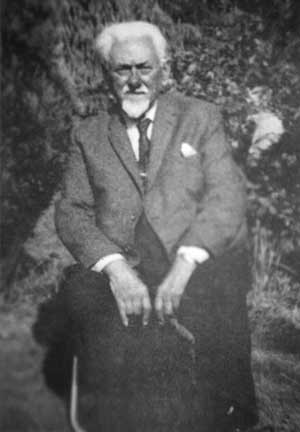
Charles Carter was the architect of 20th-century British astrology. Born in Parkstone, Dorset, he served as president of the Astrological Lodge of London and later founded the Faculty of Astrological Studies. His works—The Astrological Aspects, The Principles of Astrology—redefined astrology as a disciplined field of structured interpretation. Carter’s approach was analytic, skeptical, and clear-eyed. He refused dogma and sought logic in the stars. Without him, modern astrology in the English-speaking world would have no skeleton.
Margaret Hone
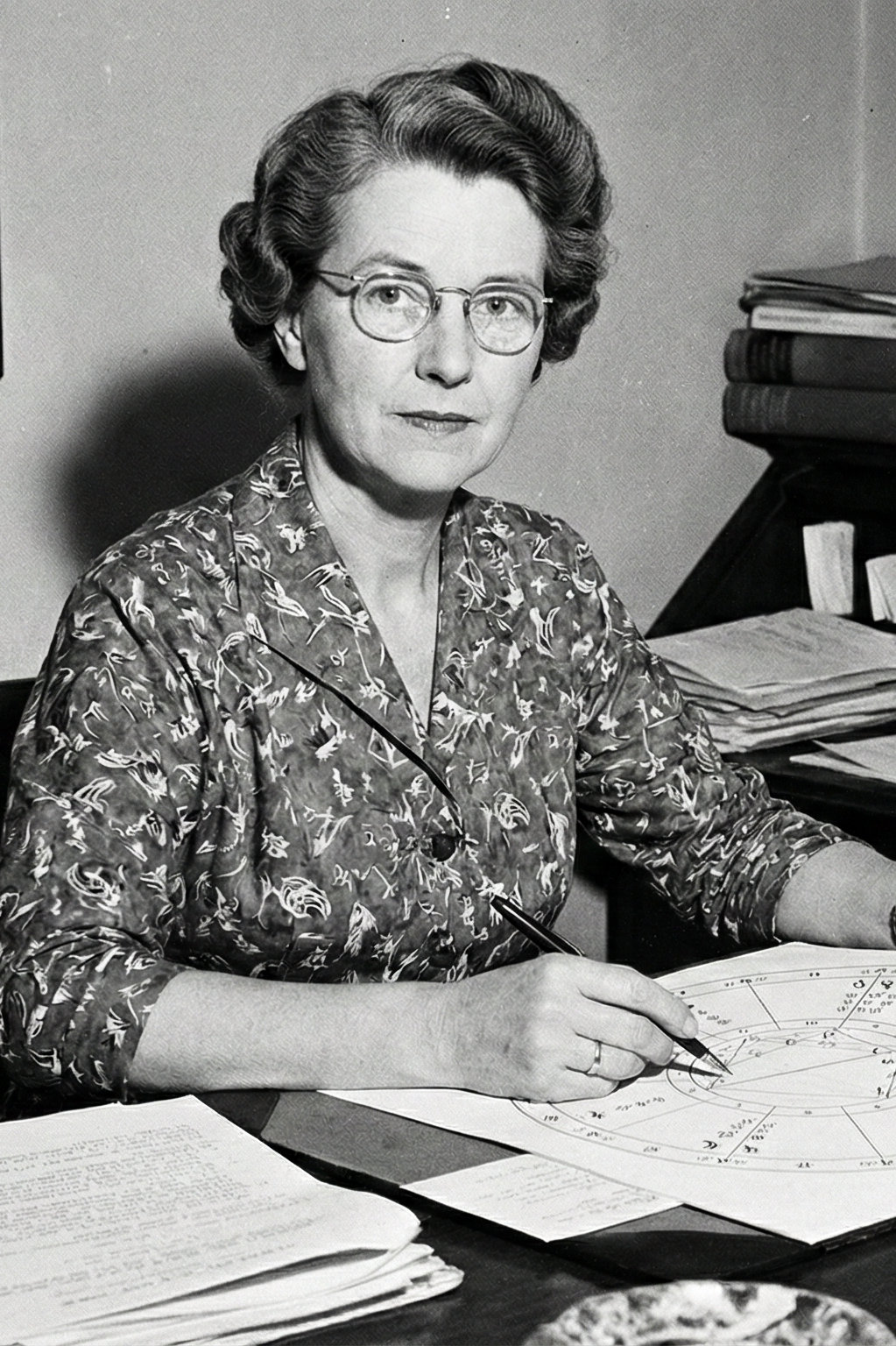
Margaret Hone was the pedagogue of the heavens. Trained as a mathematician, she translated astrological complexity into teachable clarity. Her landmark book The Modern Text Book of Astrology became the foundation of formal astrological education in the UK. Hone co-founded the Faculty of Astrological Studies alongside Carter and others, bringing coherence and accessibility to a field still entangled in mystery. She didn’t theorize—she codified. Her legacy is every syllabus, every classroom, every student who learned that the sky has structure.
Dialogue With the Stars: A Hypothetical Meeting
You: When you write "... energies that shape the alchemical journey of the duo..." I feel cheated by such a meager, generic readings. Dig dipper. What planets give the real energy.
The Alchemist: In classical astrology, the planets that provide the most dynamic and potent energy to a relationship are often Mars and the Sun due to their inherent nature and the aspects they form. Let's explore their influences in this particular chart.
Sun Conjunction Mars (0.32°): This is one of the most powerful aspects in this synastry, creating a fusion of vitality and action. The Sun, representing the core self and life force, aligns closely with Mars, the planet of drive and assertiveness. This conjunction infuses the relationship with motivation, courage, and a pioneering spirit. Both individuals are likely to feel energized and invigorated by each other's presence, propelling them to take initiative and actively pursue shared goals. The relationship is marked by dynamism and a sense of adventure, making it a potent force for mutual growth and exploration.
Mars Opposition Venus (6.64°): While not as close in orb, this aspect introduces a potent polarity between desire and action. Mars, with its choleric and assertive nature, contrasts with Venus, the planet of attraction and harmony. This opposition can create a magnetic tension, drawing the individuals together through both attraction and challenge. There may be a dance of push and pull, where passion is both a unifying and a testing force. This dynamic can lead to a relationship filled with excitement, as both partners navigate the balance between drive and desire, learning from each other's differences.
Together, these aspects suggest that Mars and the Sun are key players in energizing the relationship, driving it forward with enthusiasm and passion. The combination of Mars' assertive energy with the Sun's life-giving force creates a potent blend that can lead to a vibrant and fulfilling connection, filled with opportunities for growth and shared adventure.
You: What aspect can dampen Mars and Sun energies?
The Alchemist: In classical astrology, aspects from Saturn can often dampen or challenge the fiery and assertive energies of Mars and the Sun. Saturn is a planet associated with limitation, structure, and discipline, and its influence tends to slow down or put constraints on the more energetic and enthusiastic planetary forces.
Saturn Square Sun (7.95°): This aspect introduces tension and obstacles, as Saturn's melancholic and restrictive nature forms a challenging angle with the Sun's core vitality. It may manifest as a sense of heaviness or responsibility that tempers the Sun's natural exuberance. The individuals might feel pressures or limitations in expressing their true selves, requiring them to work through difficulties and learn resilience.
Saturn Square Jupiter (4.01°): While not directly involving Mars or the Sun, this square can still affect the overall dynamic by impacting Jupiter's expansive and optimistic energy, which often supports and amplifies the Sun and Mars. Saturn's influence here might bring a more cautious or restrained approach to growth and optimism, which could indirectly moderate the combined energies of Mars and the Sun in the relationship.
These Saturnian aspects suggest that while the relationship is infused with vitality and action, there are also lessons of patience, endurance, and the necessity of overcoming challenges together.
You: Great. Our pair in question, were famous astrologers of the yesteryear, Charles Carter and Margaret Hone. What would you tell them, now, November 30, 2025, under the Las Vegas night, next to The Dome showing the Universe, had their legacy hold?
The Alchemist: Under the vast canopy of stars and the shimmering lights of Las Vegas, Charles Carter and Margaret Hone, your legacy as pioneering astrologers has indeed endured. Your contributions continue to inspire those who seek to understand the celestial dance and its influence on human affairs.
As you stand beneath The Dome, reflecting on the universe's mysteries, know that your work laid the foundations for countless seekers to explore the profound connections between the heavens and Earth. Your teachings have transcended time, guiding new generations in the art of interpreting planetary influences with wisdom and integrity.
The celestial symphony above reminds us of the eternal truths you championed: that the cosmos is a mirror of the soul, and within its patterns lie the keys to understanding our place in the grand design. Your legacy is not only in the knowledge you imparted but also in the spirit of curiosity and exploration you instilled.
In this moment, the Sun and Mars, symbols of vitality and action, remind us of your dynamic contributions, while Saturn’s presence speaks to the discipline and dedication required to forge a lasting mark on the world of astrology. Your legacy is a testament to the harmony of these forces, a balance of passion and perseverance, echoing through time as a guiding light for all who follow in your footsteps.
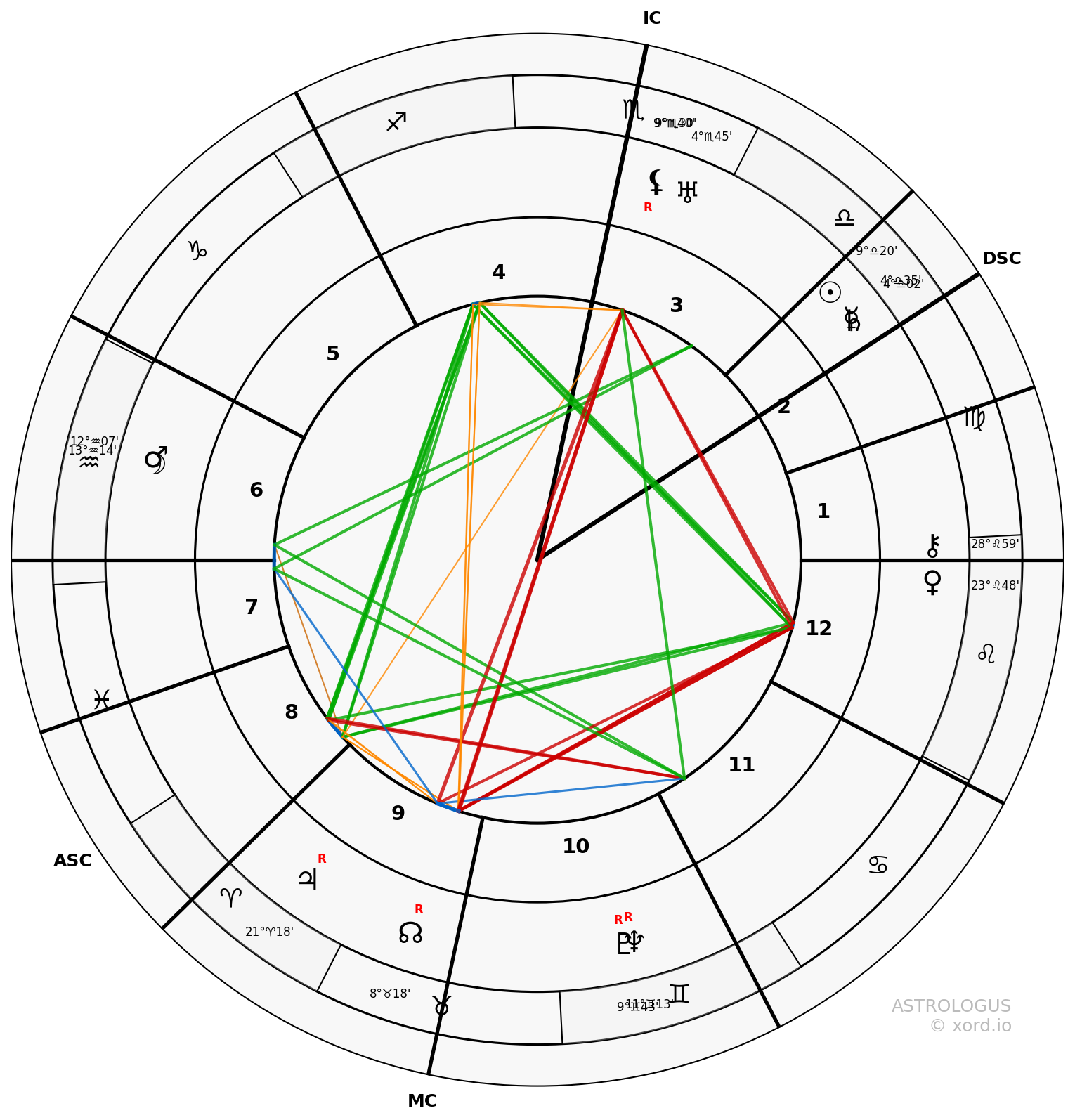
Charles Carter and Margaret Hone didn’t trade symbols or manifestos—they built the scaffolding. This chart above is Carter’s, but should you wish to explore a more mythic contrast—the sacred and the scholarly—see The Priestess & The Chronicler: The Synastry of Demetra George & Robert Hand. Carter and Hone weren’t rivals. They were a method and a mirror. Their synastry isn’t fireworks. It’s an equation that still balances.
You've seen their charts. Now discover your own. A one-time purchase of $4.99 unlocks the ASTROLOGUS platform and 50 readings across all AI personas.
Disclaimer: This is for exploration and symbolic insight only. ASTROLOGUS offers rigorous interpretations, but no claim is made beyond the symbolic and artistic.
It's not astrology predicting your life.
It's you recognizing your life inside astrology.
About the Author: Cesare di Monte Calvi is the esoteric historian behind The Raven’s Enigma and lead mythographer of the ASTROLOGUS project. His work bridges Renaissance gnosis with digital cartography, reviving the lost grammar of the stars for a post-algorithmic age.