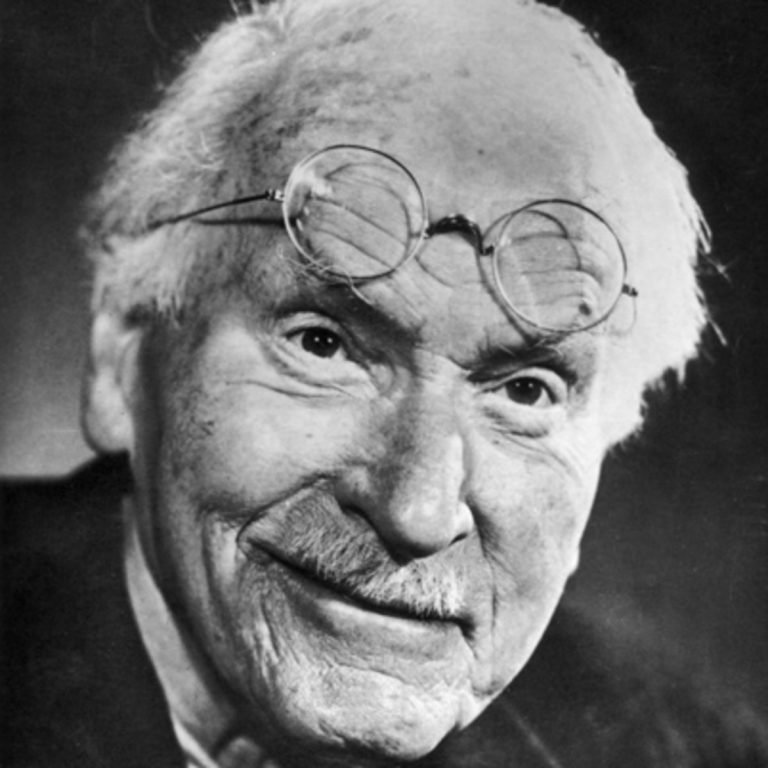
This episode offers an unprecedented, multi-dimensional look into the cosmic blueprint of Carl Gustav Jung, the pioneering figure of analytical psychology. We analyze his natal chart not once, but three times, using the distinct voices of Astrologus: the poetic and mythic Symbolist, the neutral and structural Diagnostician, and the classical Alchemist. This triptych of interpretations provides a unique 360-degree view, demonstrating how a single chart can reveal different layers of truth.
You've seen their charts. Now discover your own. A one-time purchase of $4.99 unlocks the ASTROLOGUS platform and 50 readings across all AI personas.
Only $4.99
One-time purchase • Lifetime access • 50 readings included
Stardust Memories: Save and revisit all your readings
✅ 30-Day Money-Back Guarantee
Changed your mind?
⚡ Instant Dashboard Access • ✅ Lifetime License
All cryptocurrency sales are final
The Symbolist Interpretation
Mars (7) sextile Jupiter (3):
In the oceanic depths where Mars wields his spear of spirited ambition, he crosses paths with Jupiter, the magnanimous sage sitting on his mountain throne in Capricorn. A gentle cosmic echo sounds - the meeting is a sextile, an alliance devised not of force, but of harmonious intent. One is a warrior of the waters, the other a king of the crag, yet both entwine in mutual elevation. They dream of lands to conquer and skies to explore, with Mars igniting daring actions, and Jupiter offering expanse and fortune to every strike.
Mars (7) quincunx Moon (9):
The warrior Mars gazes coldly upon the veiled Moon, cloaked in her Libran robes of balance, yet ensnared in quincunx-an awkward dance. Here resides a celestial puzzle, where Mars' strife and force confront the Moon's shadow lands of emotion and introspection. This dissonant aspect weaves a tale of longing for equilibrium amidst discord-like the tension that exists between the storm's fury and the tranquil nightfall. It echoes Persephone's tale, betwixt two worlds, neither fully of the earth nor the underworld.
Sun (21) semisextile Mercury (24):
In an ethereal whisper, the Sun-a charioteer blazing across the firmament-casts a knowing glance towards Mercury, the messenger god with winged sandals, traversing the Piscean waves. Bound by a semisextile, their cosmic conversation is a sotto voce of insight and revelation. The Sun's beacon of self harmonizes in quiet reflection with Mercury's fluid mind. This is the light of Apollo entwined with Hermes' wit, crafting a narrative imbued with the poetic logic of celestial serendipity.
Venus (2) opposite Moon (9):
In the theatre of the heavens, Venus, adorned in her gown of Aries' fire, faces the Moon, draped in Libra's silken robes of equilibrium. Their opposition is a taut string across the sky a dialogue of beauty and emotion, of heart's desire and reflective yearning. Venus, ever the lover, seeks the allure of passion's fervency, while the Moon, a silver mirror, seeks the heart's quiet home. This choreography is reminiscent of Aphrodite and Selene, a cosmic duet upon the stage of longing and fulfillment.
Summary: In this celestial tapestry, weavers Mars and Jupiter instigate adventure and ambition, bound in a cooperative dance of warrior and philosopher. The Moon's spectral presence brings emotional undertones challenged by Mars' forceful intent, crafting a nuanced interplay between action and reflection. The Sun whispers secrets to Mercury, igniting a philosophical discourse that meanders like a river through ancient oracles. Across the starry expanse, Venus and the Moon paint an artistry of contrasts, where passion and poise spin tales of harmony and challenge. Thus, the astral stage unfolds, each aspect a note in the symphonic motion of the spheres.
The Alchemist Interpretation
Mars (7° Pisces) sextile Jupiter (3° Capricorn):
This harmonious aspect between two nocturnal planets suggests a potential for fortunate endeavors in matters relating to expansion and assertion. Mars in Pisces, disposited by the benefic Jupiter in Capricorn, finds an avenue for action that is supported by wisdom and structured growth, although it is a weaker influence when waning. This sextile fosters growth in choleric expression tempered by sanguine principles.
Venus (2° Aries) opposite Moon (9° Libra):
Here, the nocturnal luminary Moon in its dignified sign of Libra opposes Venus, highlighting a tension between personal desires and social harmony. Venus in Aries burns brightly, vigorous in its choleric expression, yet is in detriment, suggesting challenges in relationships or aesthetic pursuits.
Summary: In classical terms, we observe the interplay of temperaments and sect principles informing the dynamics of this natal chart. Mars' harmonious relationship with Jupiter hints at opportunities for expansion through the masculine, diurnal principles of Jupiter, while Venus and the Moon negotiate through the tension between personal desires and external relationships. This chart offers a tapestry of classical astrological interrelations, weaving the implications of sect, dignity, and planetary joy into a coherent celestial narrative, unencumbered by the non-traditional elements.
The Diagnostician Interpretation
Mars (7) sextile Jupiter (3):
Orb: 2°26'. Mars and Jupiter form the most exact aspect, establishing a soft geometric connection.
Mars (7) quincunx Moon (9):
Orb: 4°3'. Mars and Moon participate in a dynamic aspect with an angle that introduces structural complexity.
Sun (21) semisextile Mercury (24):
Orb: 10°27'. Forms a minor aspect pattern with significant distance from exactitude.
Venus (2) opposite Moon (9):
Angle: 119°40'. Polarized alignment where Venus and Moon establish a tension axis.
Chart Features:
Aspect Counts: 1 Conjunction, 2 Oppositions, 3 Squares, 3 Trines, 3 Sextiles, 2 Semisextiles, 3 Quincunxes. This natal chart includes a Venus-Jupiter-Moon T-square, engaging Venus and Moon in an antagonistic formation, with Jupiter acting as a focal point of tension.
Summary: Mars is a recurrent participant with two aspects, linking in sextile and quincunx. The configuration features multiple balancing sextiles and trines offset by challenging squares and oppositions, with a central T-square highlighting tension. The overall structure displays a complex distribution of soft and hard aspects at varying degrees of exactness.
Carl Gustav Jung, the Swiss psychiatrist and founder of analytical psychology.
Following a creative crisis and an irreconcilable split with his mentor Sigmund Freud in 1913, Carl Jung embarked on a profound period of self-exploration he called his "confrontation with the unconscious." From this journey, he emerged with the foundational concepts of analytical psychology. He proposed a psyche composed not only of a personal unconscious but also a collective unconscious, a universal reservoir of shared human images and patterns he termed "archetypes"—a concept that would profoundly influence the psychological astrology of figures like Liz Greene.
Jung’s vision was holistic, embracing the spiritual and mystical dimensions of human experience that mainstream science often dismissed. He argued that the psyche inherently strives for wholeness through a process called "individuation," which involves integrating the conscious ego with the unconscious, including its darker "shadow" aspects. In his later work, he drew heavily on metaphors from medieval alchemy, seeing the alchemical transformation of lead into gold as a symbol for the psyche's journey toward the Self—a union of opposites he called the *coniunctio*.
Disclaimer: This is for exploration and symbolic insight only. ASTROLOGUS offers rigorous interpretations, but no claim is made beyond the symbolic and artistic.
It's not astrology predicting your life. It's you recognizing your life inside astrology.
About the Author: Cesare di Monte Calvi is the esoteric historian behind
The Raven’s Enigma
and lead mythographer of the ASTROLOGUS project. His work bridges Renaissance gnosis with digital cartography, reviving the lost grammar of the stars for a post-algorithmic age.